

From expanding healthcare infrastructure to advancements in artificial intelligence and modular construction, Layton Construction Executive Vice President Cris Bryant, who has 30 years of experience in the industry, discusses the opportunities and trends shaping construction across the Mountain States and Southwest.
Q: Which market sectors offer the biggest opportunities in the Mountain States and Southwest, and what projects are driving Layton Construction’s growth?
Bryant: We’re seeing significant growth across several sectors, but the opportunities really depend on the individual market.
In New Mexico, we’re seeing increased investment in higher education, healthcare, and technology. One project we’re particularly excited about is the University of New Mexico School of Medicine expansion in Albuquerque. It’s a major investment in the region’s healthcare and educational infrastructure, and I believe it’s going to be a project we’re talking about for years to come.
Colorado is experiencing what I would call a healthcare boom. It seems like nearly every major healthcare system is either planning, building, or completing a project. What’s interesting is the diversity of those investments.
Some systems are focused on specialized care, such as cancer treatment or orthopedics. Our work with CommonSpirit Health, for example, includes an orthopedic-focused facility, while our work with AdventHealth is helping expand access to care in growing communities. The freestanding emergency department we’re building in Castle Pines is a great example of how healthcare providers are responding to population growth and looking to serve communities where access to care may be limited.
Idaho is another particularly strong market. We’re seeing substantial growth in healthcare, residential construction, and aviation infrastructure. Projects like the Residences at Wilson Creek, which will soon be the largest build-to-rent community in the state with 251 units, and the expansion of St. Luke’s Boise Medical Center reflect the demand that comes with more people choosing to call Idaho home.
We’ve had an office in Idaho for more than 20 years. We’ve built relationships with owners and trade partners over decades, and that established presence has positioned us to support the state’s continued development.
Q: Healthcare is clearly a major driver of growth. What makes Layton particularly well-positioned to meet that demand?
Bryant: Healthcare is really what established our roots in Denver. It’s a market we know extremely well, and we’ve consistently ranked among the nation’s leading healthcare contractors.
We understand the unique challenges healthcare owners face, whether that’s building a new hospital, expanding an existing campus, or developing specialized treatment facilities. We can speak their language because we understand their operational needs and what it takes to deliver these complex projects.
We’re also able to leverage expertise from across Layton’s national operations. Beyond healthcare, we have extensive experience in hospitality, multifamily, and other specialized markets. When we see opportunities in the Mountain States, we can draw on talented teams and successful projects from across the country.
I think one of Layton’s strengths is that we stay focused on the sectors where we know we can deliver. We aren’t trying to be everything to everyone. We want to be experts in the markets we serve, and that approach has helped us build long-term relationships and maintain consistent growth.
Q: Are there any construction sectors that have cooled, and what challenges do you anticipate in the coming year?
Bryant: The most noticeable slowdown we’ve seen in Colorado has been in the traditional office and tenant improvement market, with some exceptions in areas like Cherry Creek.
The shift toward remote work during the pandemic had a significant impact on office construction. We’re starting to see more companies return to traditional office environments, but demand hasn’t rebounded to the same level we’re seeing in some of our other markets, including Texas, Nashville, Florida, and Salt Lake City.
That said, there really aren’t many sectors we specialize in that have experienced significant slowdowns. We’ve continued to grow our market share and revenue in the areas where we have established expertise.
I think that’s a reflection of our strategy. We’ve been intentional about focusing on sectors where we have the experience, resources, and relationships to be successful. Rather than spreading ourselves too thin, we’ve concentrated on doing what we do best.
Q: How are emerging technologies, particularly artificial intelligence, changing the way Layton approaches construction?
Bryant: Artificial intelligence has entered the construction industry in a big way. We’re seeing new AI-driven applications for everything from preconstruction and estimating to productivity tracking, quality control, and project management.
Layton has always been an early adopter of technology. We were using building information modeling and visualization tools 15 years ago, when many others in the industry were just beginning to explore them.
Today, we’re seeing that same evolution with AI.
One example is Doxel, a technology we’re using on some of our major healthcare projects to track production and work in place. It provides our superintendents and field teams with valuable information to monitor productivity and quality, and it can also support accounting and billing processes.
What’s particularly exciting is how quickly these technologies are advancing. It seems like every week there’s a new application designed to improve safety, increase productivity, or streamline preconstruction.
Of course, adopting technology isn’t just about having the newest tools. We want to make sure those tools deliver meaningful value.
Our relationships with clients play an important role in that process. We’re transparent when we want to test new technology on a project, and we work with owners to determine whether it makes sense. We’re fortunate to have clients who are willing to explore new approaches and ask the same questions we do: Can we build more efficiently? Can we improve cost certainty? Can we save time without sacrificing quality or safety?
Those partnerships allow us to innovate while keeping the client’s goals at the center of the process.
Q: Beyond artificial intelligence, what other construction methods or innovations are gaining momentum?
Bryant: Prefabrication and modular construction are becoming increasingly mainstream, and I think they’re fundamentally changing how we approach certain projects.
We’ve seen firsthand how these methods can improve schedule predictability, cost certainty, and safety.
When you’re constructing components in a controlled factory environment, you have greater consistency in production. You’re less dependent on the conditions of an active jobsite, and you can manage labor and materials more efficiently.
One example is our work on University Health Retama Hospital in San Antonio. We’ve been able to compare our prefabrication and modular approach with a similar hospital project using more traditional construction methods.
That comparison has demonstrated some of the advantages of modular construction, particularly when it comes to production efficiency, labor management, and schedule performance.
For owners, that’s incredibly valuable. Greater certainty around costs and schedules allows them to make more informed decisions and plan with confidence.
I believe we’re going to continue seeing these approaches become more common throughout the industry, especially as contractors and owners recognize the benefits.
Q: How does Layton’s longstanding presence in markets like Idaho influence its ability to capitalize on regional growth?
Bryant: Relationships and local knowledge make an enormous difference.
We’ve been in Boise for more than two decades. We know the owners, we know the subcontractors, and we understand the market. That gives us an advantage over companies entering the region for the first time.
There’s also a strong connection between Boise and Salt Lake City. As a company headquartered in Utah, we’ve benefited from that regional familiarity and the reputation we’ve built throughout the Mountain West.
Over the years, we’ve completed projects ranging from Boise State’s Syringa Hall, which was named the Idaho Business Review’s Top Project of the Year, to major healthcare facilities and aviation infrastructure. Those projects have helped establish us as a trusted partner.
Today, we’re working on major investments like the St. Luke’s Boise Medical Center expansion, which will transform healthcare infrastructure in the region.
For us, growth isn’t just about pursuing the next big project. It’s about building on the relationships and experience we’ve established and continuing to deliver for the communities we serve.
Q: Looking ahead, where do you see the Mountain States and Southwest construction markets headed over the next year?
Bryant: I’m extremely optimistic.
The Mountain States and Southwest continue to attract people and investment. Whether you’re looking at Phoenix, Denver, Salt Lake City, or Boise, these are communities where people want to live, work, and raise families.
That population growth creates a ripple effect across construction markets. When people move into a region, they need housing, schools, healthcare facilities, and other essential infrastructure. Investment in one sector often creates opportunities in several others.
We’re seeing that happen throughout the region, and I don’t anticipate a significant slowdown in the near future.
Layton is particularly well-positioned because we’re operating in markets with strong long-term potential, and we’ve established expertise in the sectors supporting that growth.
We’ve spent decades building relationships, developing talented teams, and refining how we deliver projects. I believe those investments position us for success not only over the next year, but for the next decade.
Have questions about Layton? Or have a project coming up? Check out our portfolio and or contact us to discuss.
About Layton Construction
Layton Construction is a privately held national general contractor, delivering predictable outcomes in commercial construction since 1953. Headquartered in Salt Lake City, Utah, Layton operates from 16 strategic offices across the United States, employing more than 2,200 construction professionals who serve diverse markets including healthcare, education, commercial office, industrial, hospitality, and multi-unit residential. Founded on the core values of honesty, unity, safety, and quality, Layton has built a reputation for excellence in complex project delivery while maintaining strong partnerships with clients, architects, and trade partners nationwide.
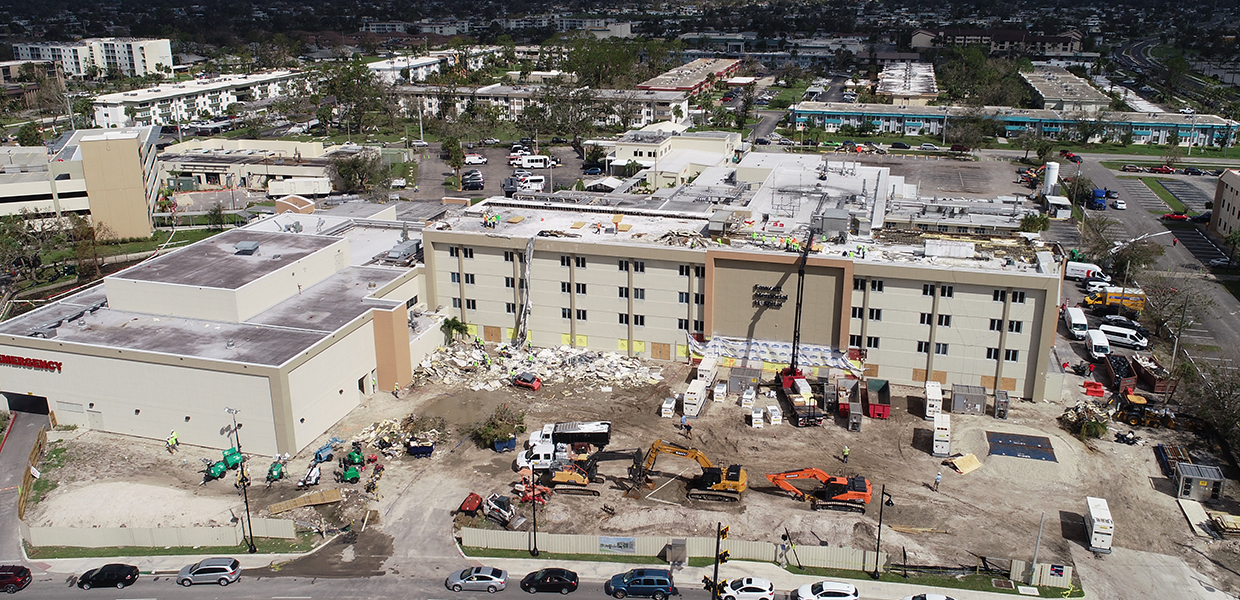
When a Category 4 hurricane flooded a 250,000-square-foot hospital, Layton's Florida team and dozens of trade partners worked through shortages, chaos, and the holidays to bring it back.
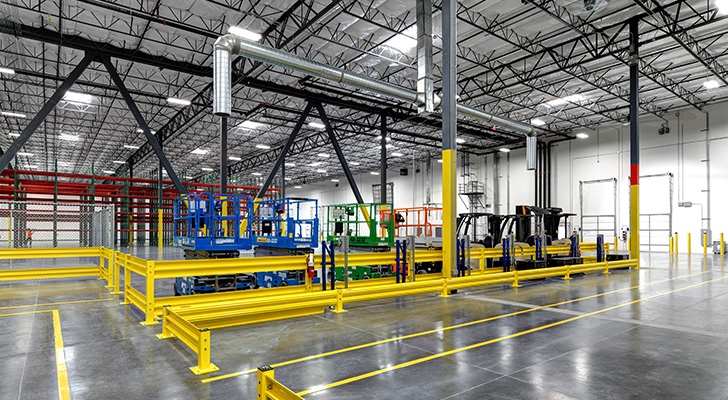
Considering the complexities of cold storage facilities, their construction demands a specialized approach and expertise. And with such a rapidly growing market, key players like Layton are primed and poised to step up.