
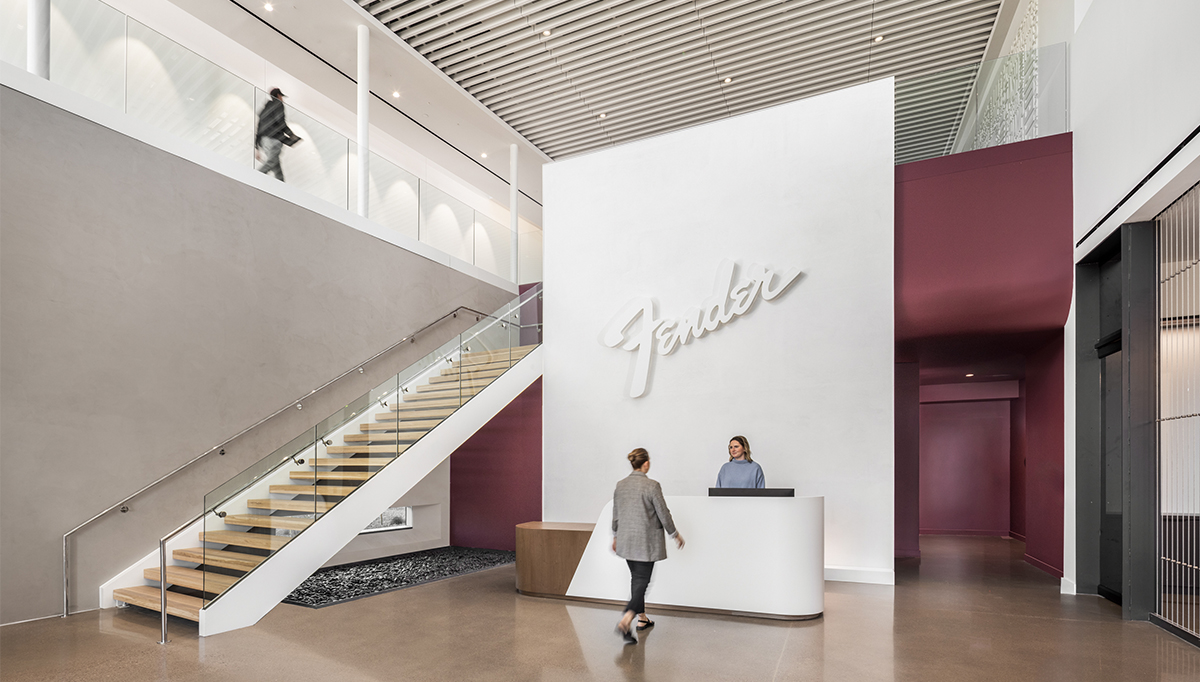
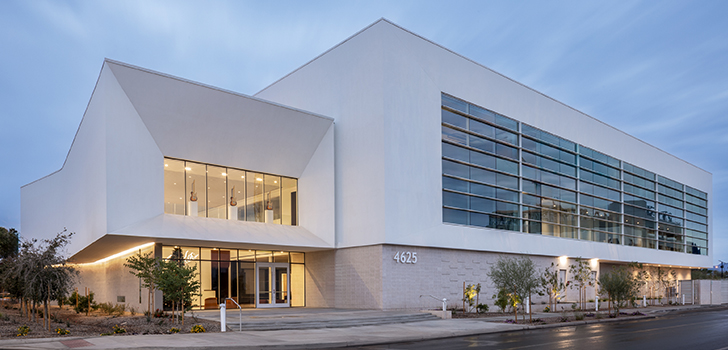
When Fender Musical Instruments Corporation decided to consolidate two Scottsdale locations into a single headquarters, they invested in a 78,000 SF facility that reflected their culture. The building includes a professional recording studio, private practice rooms, a model shop for R&D, and an amplifier testing room where equipment gets pushed to its limits.
But fitting all of that into a constrained site in Phoenix’s Paradise Valley redevelopment while meeting stringent acoustic and performance requirements presented a series of technical challenges. Layton had some work to do.
The Building-Within-a-Building Challenge
The kaboom room was the centerpiece problem. Amplifier testing generates extreme noise and vibration. The room needed to be fully isolated from the office spaces above and adjacent to it, yet close enough to other operations that employees didn’t have to leave the building to access it.
“You can’t just build a regular room and hope for isolation,” said Malyn Dickson, Layton’s project manager. “We implemented a true building-within-a-building strategy. The slab was poured independently from the rest of the building. The walls were double CMU block with mortar-blocking material between them to break any connection. Even the ceiling was isolated.”
The result was a room capable of containing the vibration and decibel levels of amplifier failure testing without impacting the office above or neighbors outside. During acoustic testing, the team went upstairs and put their hands on tables to verify there was no vibration.
Managing Constraints
Site constraints forced every decision. The footprint was maximized to its limit, and existing utilities and setbacks meant the building’s location and orientation had to be precise. There was no room for error in sequencing or execution.
According to Dickson, early collaboration with Fender and the design team proved critical. “We brought them into quality reviews before going full production. That first work-in-place review established the standard before we scaled up across the project. It prevented rework and kept us aligned.”
The building also had to function as more than office space. The recording studio needed industry-standard acoustic engineering. The model shop had to support real-time product prototyping. The flexible workspaces had to serve Fender’s operational needs while reinforcing their creative culture.
Execution at Scale
What emerged was a facility that consolidates two locations into one modern hub. A professional recording studio. Private practice rooms where staff can work on music. A fully isolated kaboom room. A model shop for designers to prototype next-generation products. Flexible workspaces. A third-floor performance deck.
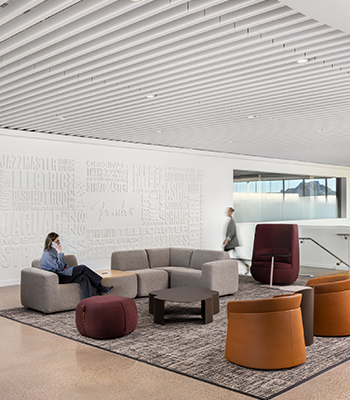
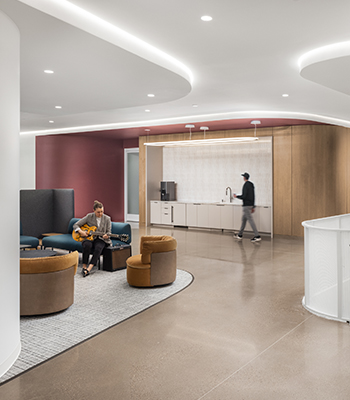
The building also carries Fender’s design language subtly. Minimalist forms, double-height glazing, skylit corridors. The interior palette is subdued, letting the instruments and the culture speak for themselves. Even the floor plan has a guitar shape, though you’d only know it by zooming out on the plan view.
“That kind of subtlety is how Fender approaches their brand,” Dickson said. “The details matter, but they don’t announce themselves.”
The Result
The project earned recognition from the AZRE RED Awards and Best of NAIOP awards for blending construction excellence, architectural innovation, and community impact. For Layton, the real measure was delivering a facility that authentically reflects Fender’s culture while solving some of the most complex acoustic and technical challenges in commercial construction.
The building stands as proof that purpose-built facilities, when executed with precision and collaboration, can do more than meet functional requirements. They can reinforce culture, enable innovation, and become landmarks in their communities.
Have questions about Layton? Or have a project coming up? Check out our portfolio and or contact us to discuss.
About Layton Construction
Layton Construction is a privately held national general contractor, delivering predictable outcomes in commercial construction since 1953. Headquartered in Salt Lake City, Utah, Layton operates from 16 strategic offices across the United States, employing more than 1,700 construction professionals who serve diverse markets including healthcare, education, commercial office, industrial, hospitality, and multi-unit residential. Founded on the core values of honesty, unity, safety, and quality, Layton has built a reputation for excellence in complex project delivery while maintaining strong partnerships with clients, architects, and trade partners nationwide.
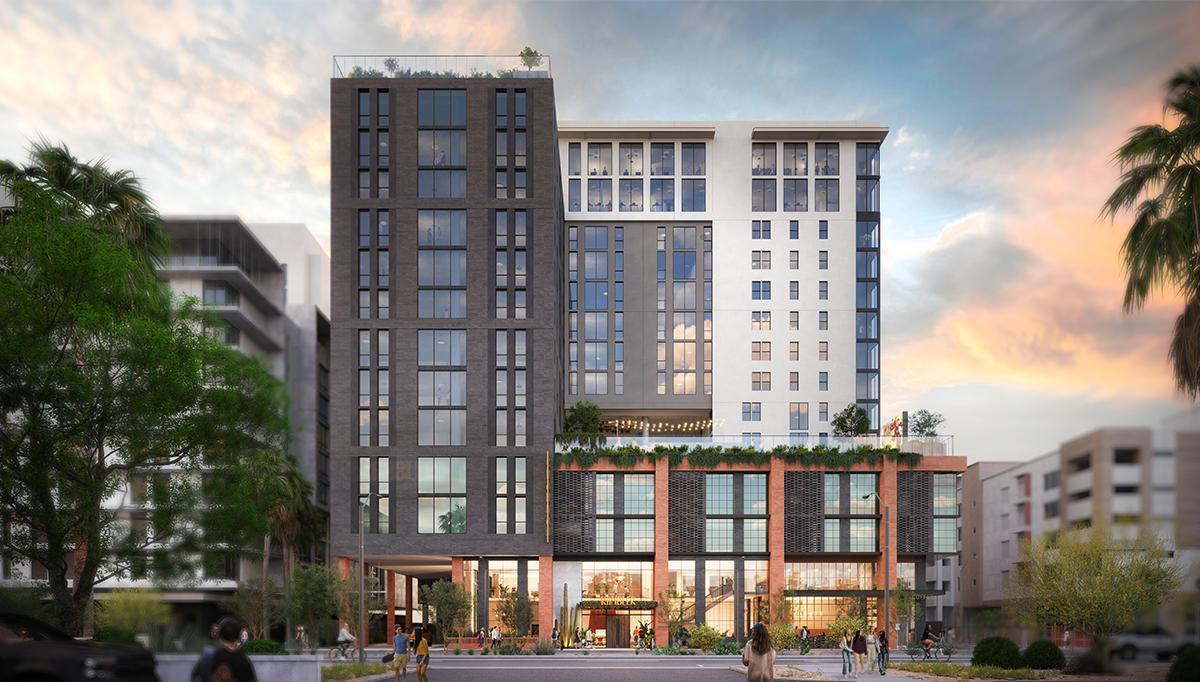
Layton Construction breaks ground on Rambler Tempe, helping to elevate student living at Arizona State University. This new high-rise, mixed-use development is expected to be complete by fall semester 2026.
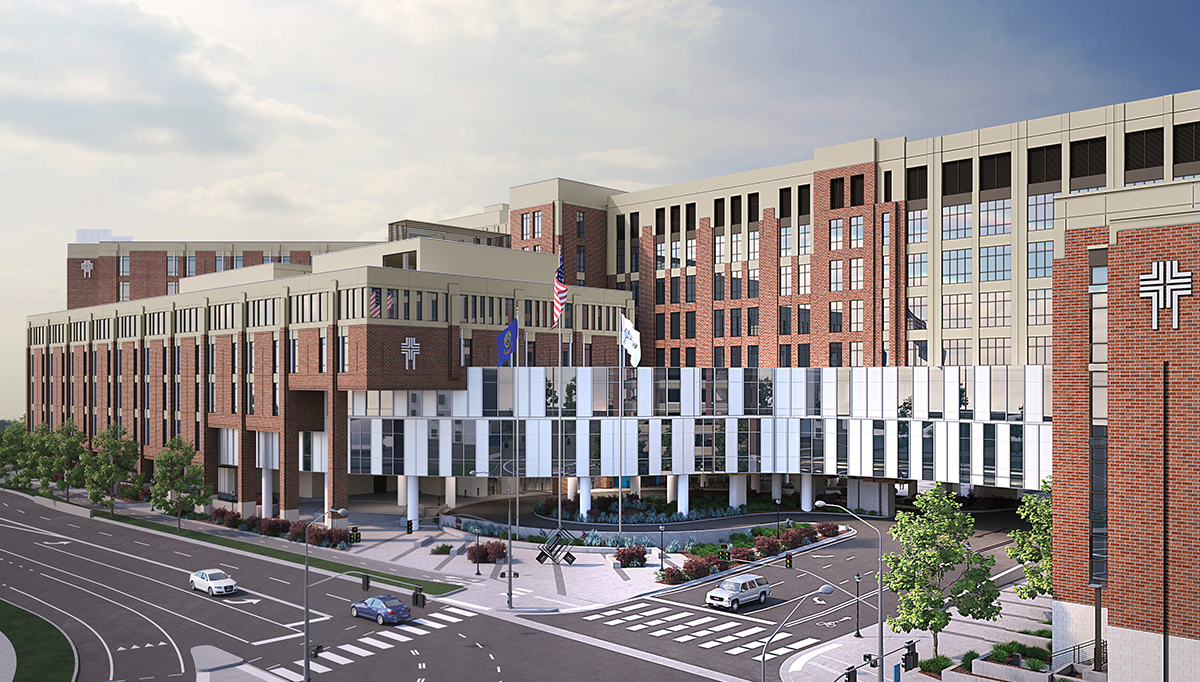
“As builders in Boise, we take great pride in contributing to the growth of our local healthcare,” said Jeremy Hobbs, Vice President of Layton Construction about this next phase that includes a new north tower and medical office plaza at the St. Luke’s Boise Medical Center.