
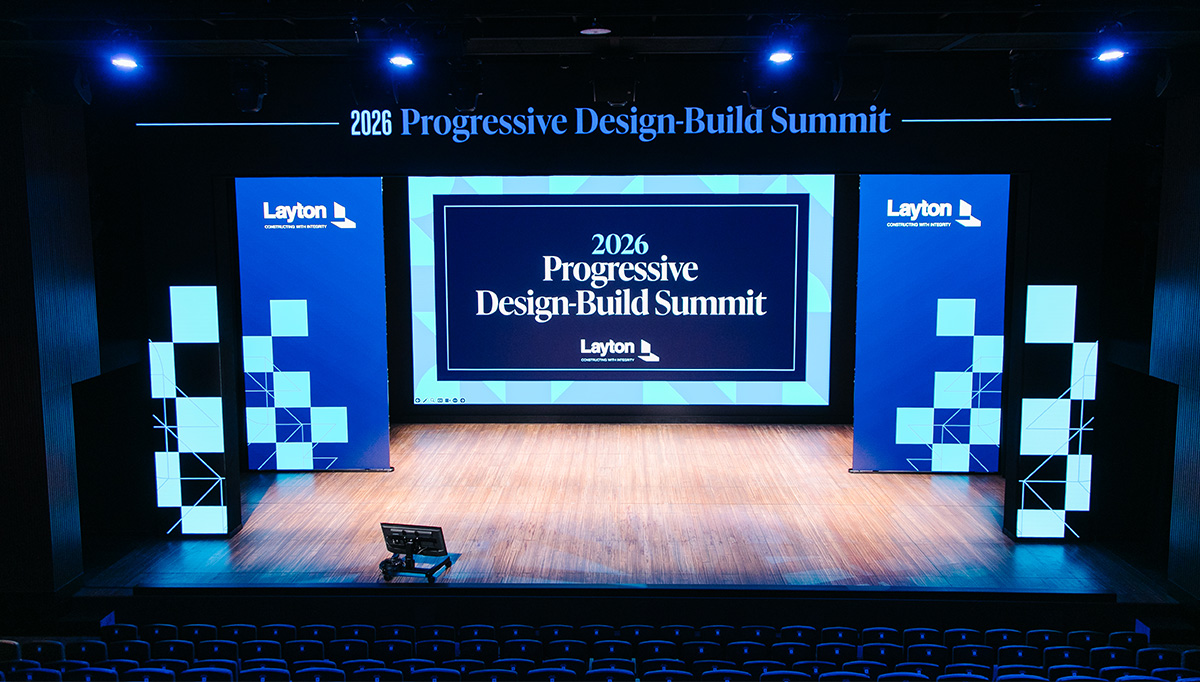
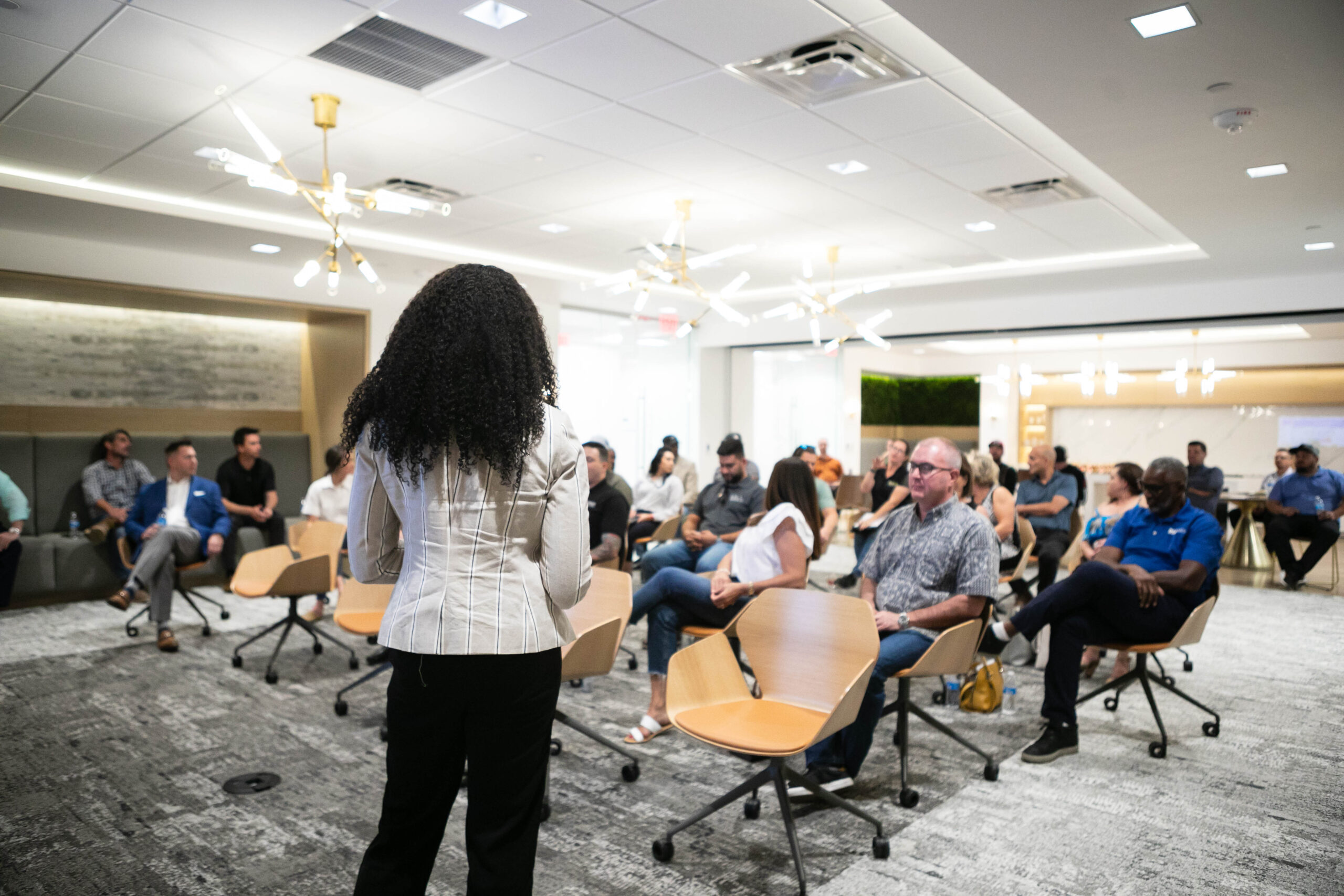
Architects, engineers, clients, and trade partners gathered at the Hale Centre Theatre’s Beehive Building in Sandy, Utah for Layton’s 2026 Progressive Design-Build Summit. The venue felt fitting—Layton built it nine years ago, and a brass plaque near the entrance still bears the company’s name.
“Progressive Design-Build is gaining traction across the country because it solves a fundamental problem,” said Jeff Palmer, Layton Executive Vice President. “Traditional delivery methods can often lock in cost, scope, and schedule before everyone fully understands a project’s risks.”
Progressive Design-Build (PDB) flips that. Palmer continues, “On day one, it brings the owner, contractor, and design team together to align goals and work through unknowns. Once we’re all on the same page, we then establish the terms of the project.” The result is fewer surprises, faster delivery, and stronger partnerships.
“This is incredible,” remarked Aleksandar Rankovic, the Chief Operating Officer for Lynk Engineers, “There’s a lot of important people from our industry here, from DFCM, construction firms, architectural firms, and owners as well. It’s what I like to see.”
The crowds quieted as PDB experts took to the very stage Layton built.
“Some of the best leadership traits come out of this type of process” explained Troy Stedman, President and CEO of Abbott Construction.
Abbott, Layton’s partner company based in Washington state and Southern California, has been making massive progress with PDB in the public sector, completing $650 million in such work.
The Industry Shift
While popular in the Pacific Northwest, states across the country are exploring the PDB approach, many getting their start with transportation projects like Nevada’s I-80 East, Missouri’s I-70 improvement plan, and Utah’s first-ever PDB project—the U.S. 89 highway transformation in Davis County, completed in June 2023.
But a lot of the recent exponential growth was triggered, in part, by a Defense Authorization Bill passed in December of 2025. Section 2809 of the bill allows the “use accelerated design-build and Progressive Design-Build procedures for military construction projects.”
This includes projects like the Child Development Center (CDC) at Joint Expeditionary Base Little Creek-Fort in Virginia, which Layton broke ground on in January. Clint Watson, Layton Design Manager focused primarily on military projects, says “The typical construction duration for a project like this is 36 months. And because of the design-build process, we’re aiming to have it completed in 14.”
That cuts the schedule by 60 percent.
Progressive Design-Build vs. Design-Build
The increased speed to completion is true in both design-build and PDB approaches, but while similar, there are key differences between the two.
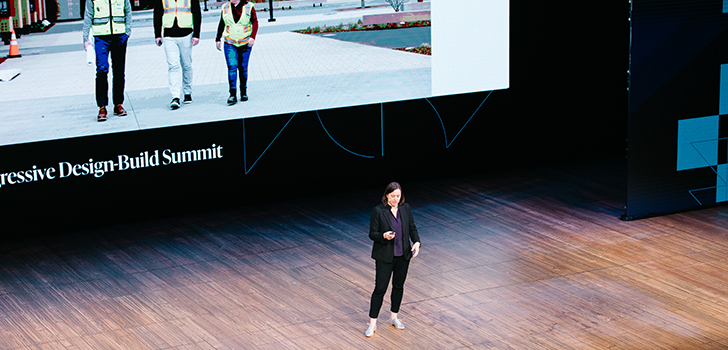
“It can get so convoluted,” said Kip Walter, Senior Project Manager with MOCA Systems, who came to Layton’s summit to find clarity from the experts. “The speakers were easy to understand and showed the differences between progressive and normal design-build.”
Speakers like Mica Klein, a partner with Perkins Coie, highlighted some of the biggest differentiators.
“Fundamentally, in design-build, an owner is contracting with a single legal entity for to deliver both design and construction of the project,” said Klein. What sets PDB apart is that “Contracts happen before there is agreement as to the business terms, cost, schedule, scope, and timing. All of this is deferred.”
This flexibility can also protect the owner and the general contractor from unforeseen expenses like tariffs.
Building the Perfect Team
“Your operations team and your design team live together for the most part. It’s kind of like a marriage,” describes Christopher Webb, Sr. Design Project Manager with Layton. Webb, a 30-year industry veteran, is a long-time champion of the design-build approach.
“When I first left architectural school, I pitched it and I pitched it and I pitched it and now it’s finally catching on.”
Throughout the summit, the word “team” came up repeatedly, as one of the biggest strengths—and weaknesses—of any design-build approach is the team’s foundation.
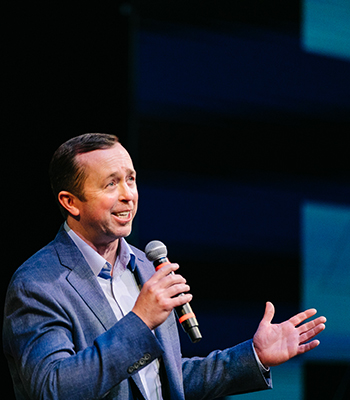

Layton doesn’t host architects in house, which allows for project-specific selections. “We build teams specifically for the type of construction that we’re doing,” adds Webb. “That’s critical.”
Paul Churchill with Abbott Construction also emphasizes the importance of building a strong team, “It’s a really collaborative delivery. If we didn’t have the relationships, we wouldn’t even get to the interview.”
That continuous collaboration and flexibility is what allows contractors to keep projects on track even when issues pop up. Summit speaker Jacob McCann, Principal with KPFF Engineers, was working on a higher education project in the Pacific Northwest when the architectural commission told them to completely change their plans.

“Normally this would derail a project,” said McCann, “but it being a Progressive Design-Build job, we had the MEP trade partners, the owner, the contractor, and the architect all at the table together, and we got it done.”
Where We Go from Here
Summit attendees buzzed with excitement for the future as the final speaker came to the stage: Diana Brown, a DBIA-certified Vice President with Consertus.
“A lot of the Progressive Design-Build materials at the national level come from the Pacific Northwest, and if you want to pay a visit to Portland, we are having a Northwest DBIA conference in May, where you will see a lot of this type of material,” said Brown.
Layton will also be hosting a Progressive Design-Build Done Right certification course at their headquarters in Sandy on May 20, 2026, for which registration is now open.
“I would encourage any cities, counties, or other municipalities interested in this delivery method reach out to experts like Layton Construction,” said Matt Boyer with the Utah Division of Facilities Construction and Management.
Applause erupted after Landon Sherwood, Director of Business Development for Layton, delivered his closing remarks—the sound of handshakes replacing captivated silence as attendees connected over what comes next.
Have questions about Layton? Or have a project coming up? Check out our portfolio and or contact us to discuss.
About Layton Construction
Layton Construction is a privately held national general contractor, delivering predictable outcomes in commercial construction since 1953. Headquartered in Salt Lake City, Utah, Layton operates from 16 strategic offices across the United States, employing more than 1,700 construction professionals who serve diverse markets including healthcare, education, commercial office, industrial, hospitality, and multi-unit residential. Founded on the core values of honesty, unity, safety, and quality, Layton has built a reputation for excellence in complex project delivery while maintaining strong partnerships with clients, architects, and trade partners nationwide.
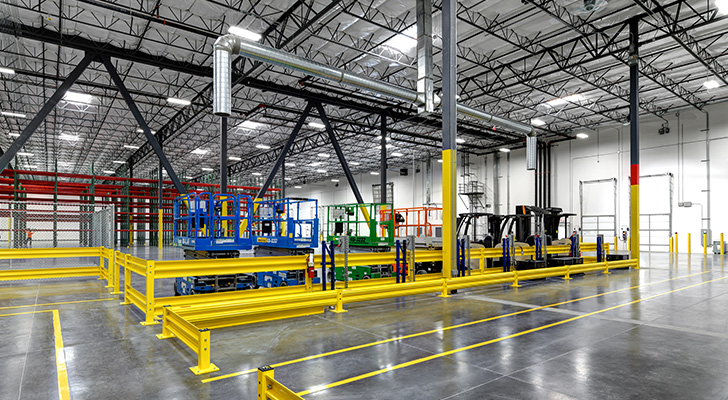
Considering the complexities of cold storage facilities, their construction demands a specialized approach and expertise. And with such a rapidly growing market, key players like Layton are primed and poised to step up.
Layton depends heavily on the expertise and capabilities of our trade partners. Led by Cherelle Cortez, our Trade Partner Engagement and Development team is focused on increasing economic impact and the growth of our trade partners.