
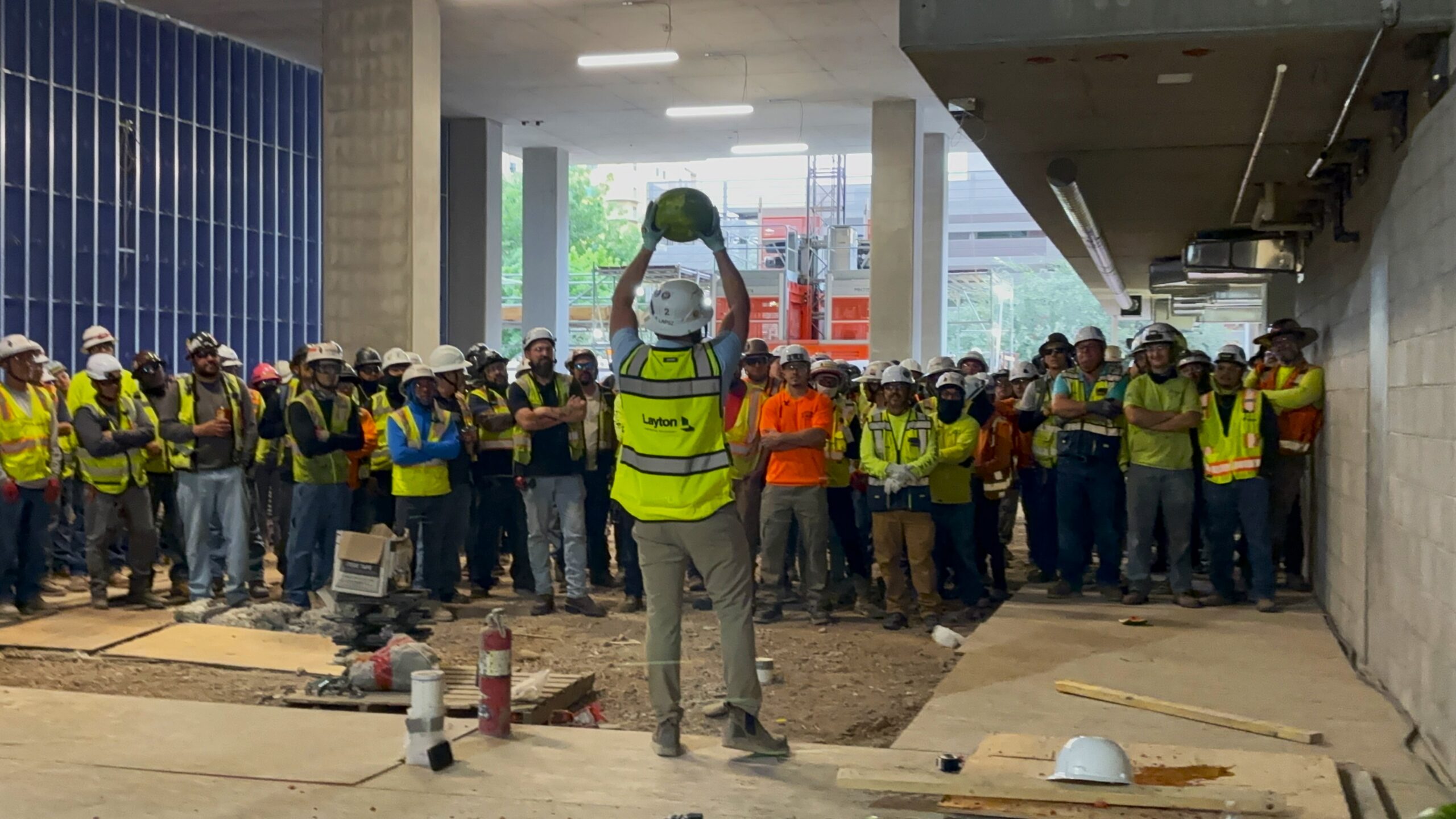
The sledgehammer head hit the watermelon with a wet, explosive crack. Pink flesh exploded across the dirt as more than 500 workers watched in silence.
No one spoke, but everyone understood: That could have been me.
“When it hits, it blows up and goes everywhere,” said Colby Tucker, ESH Manager with Layton Construction. “You can see the impact it has.”
Tucker was working on Layton’s Central Station project in Phoenix last year, a 33-story tower with more than 500 workers operating across multiple elevations simultaneously. The project was facing a “tool-drop epidemic” of sorts. No one had been injured yet, but the safety team knew it was only a matter of time.
“A little tool can turn into a 500-pound drop when it falls from heights,” says Tucker.
The data backs up their concern. According to the Bureau of Labor Statistics, more than 42,400 “struck by falling object” incidents occur annually in the U.S. These incidents account for 15% of work-related deaths nationally.
When Talking Wasn’t Enough
The safety team had the mandated conversations, led discussions, and built awareness around the issue, but the needle wasn’t moving.
“We got watermelons,” said Ben Dailey, ESH Manager with Layton, “We put the melons at ground level and installed a pipe just above it, so we could drop tools from varying heights directly on each melon.”
“We grabbed the very tools that had been dropped in the previous incidents: a sledgehammer, pieces of rebar, and caulking guns,” described Tucker, “We ended up with about 14 different tools.”
After each drop, the mood would shift from lighthearted entertainment to a sobering reality. “Colby would hold up the watermelon after impact to show people what it looked like, and people were astonished,” said Dailey.
The demonstration worked and the team noticed a shift. “We made it a whole month without a drop,” noted Tucker.
Repeating What Worked a Year Later
To maintain momentum, Tucker decided to recreate the demonstration this year for Construction Safety Week. This time, he’d do it in connection with Layton’s second-quarter safety focus: proper tool handling.
On site at Astria Tempe, just as the sun rose over the skyline, a new group of workers stood in a daze as watermelon after watermelon was destroyed right before their eyes.
That could have been me.
The Numbers Don’t Lie
The biggest contributing factors to falling object incidents include improperly stacked materials, unsecured loads during hoisting, tools left on guardrails or ledges, and excess debris.
Some of the most common tools connected to these injuries are knives, saws, and hammers.
That’s why, in addition to demonstrations like Tucker’s watermelon drop, you might notice new signage and messaging surrounding not only tool anchoring but also the implementation of chop stations.
Chop Stations Change the Game
Layton’s mission critical teams are leading the way in chop station usage. These stationary or mobile units provide designated areas for cutting or chopping materials.
The need is clear. According to the National Institute of Health, 30,000 saw blade injuries occur in the United States each year. This is especially prevalent when workers use makeshift or subpar stands, which creates messy conditions and leads to poor housekeeping.
By using a designated chop station, teams reduce mess and debris, prevent injuries from unstable setups, and avoid leaving tools unmanaged.
This approach has also become popular for indoor work, where keeping the site clean is imperative.
Torn from the Headlines
Despite the consistent tool drops at Layton’s Central Station project last year, no one was injured, but other companies haven’t been as fortunate.
A Jersey City construction site fell under extreme scrutiny in November of 2014 when a 58-year-old man delivered sheetrock and was struck by a measuring tape that had fallen off a worker’s belt 50 stories above.
He was hit in the head and died an hour after arriving at a nearby medical center.
Tragedy happens fast, so Layton is getting ahead of it.
On a bustling high-rise project with crews working simultaneously across multiple floors, it can be easy to forget about the world outside.
In large cities, where many of these projects take place, construction is constant and pedestrian traffic is heavy.
At Astria Tempe, streets fill with students heading to classes at Arizona State University, some of whom miss posted signage directing where to walk and which areas to avoid near the project.
Keeping sites clean and tools anchored protects the team below and the pedestrians who don’t think about the potential dangers of the work happening right above their heads.
Proper tool management and site housekeeping keep Layton teams, their partners, and their neighbors safe.
Quality products and quality people. That’s the Layton way.
Have questions about Layton? Or have a project coming up? Check out our portfolio and or contact us to discuss.
About Layton Construction
Layton Construction is a privately held national general contractor, delivering predictable outcomes in commercial construction since 1953. Headquartered in Salt Lake City, Utah, Layton operates from 16 strategic offices across the United States, employing more than 1,700 construction professionals who serve diverse markets including healthcare, education, commercial office, industrial, hospitality, and multi-unit residential. Founded on the core values of honesty, unity, safety, and quality, Layton has built a reputation for excellence in complex project delivery while maintaining strong partnerships with clients, architects, and trade partners nationwide.
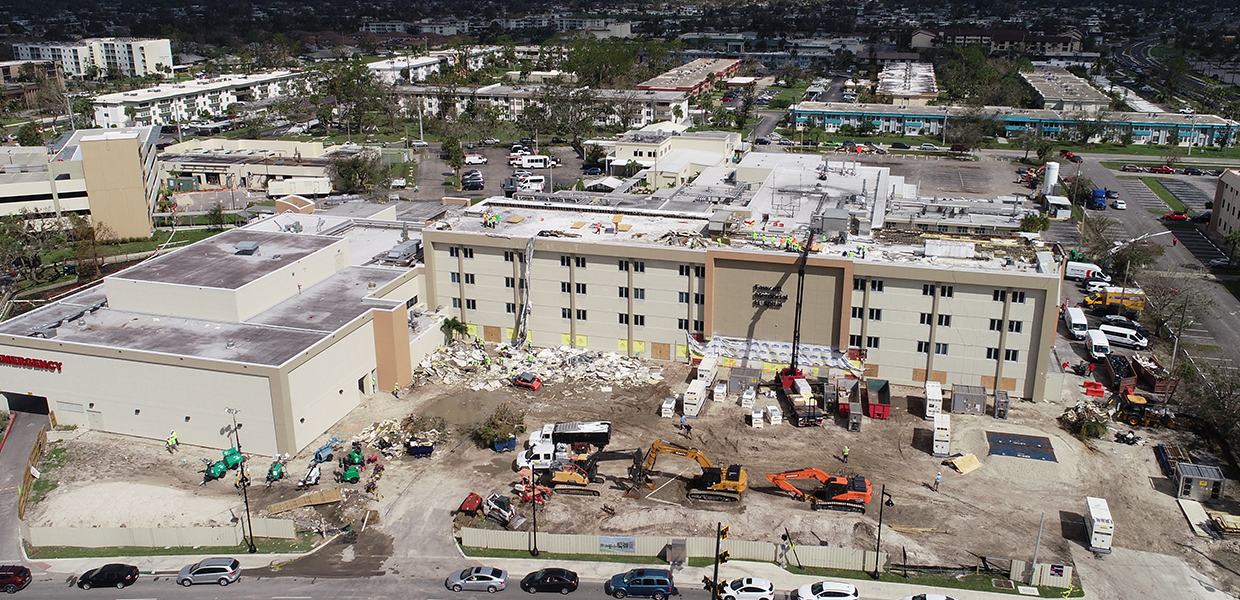
When a Category 4 hurricane flooded a 250,000-square-foot hospital, Layton's Florida team and dozens of trade partners worked through shortages, chaos, and the holidays to bring it back.
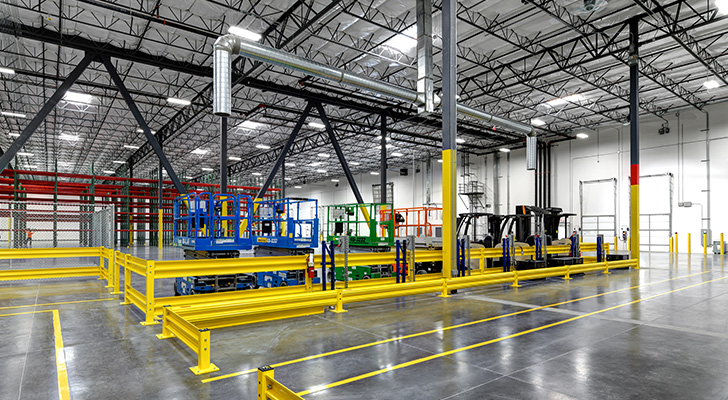
Considering the complexities of cold storage facilities, their construction demands a specialized approach and expertise. And with such a rapidly growing market, key players like Layton are primed and poised to step up.